

Last Updated: October 23, 2026
Quick Summary
To find comfortable veteran apparel, read the fabric label first and choose a lightweight cotton-poly blend over heavyweight cotton, since it breathes and moves with you. Then check the collar, shoulder tape, and seams, and match a real size chart to a shirt you already own.
- Measure a shirt you love flat, noting chest width, body length, and shoulder width, then compare to the seller's chart.
- Size up if you plan to layer under a hoodie or riding jacket, and size up when in doubt.
- Look for a ribbed collar that holds its shape and self-fabric shoulder tape that reinforces seams.
- Choose a tear-away or soft inner label, since a stiff sewn-in tag at the collar causes irritation.
- Wash cold, tumble dry low or hang dry, skip bleach, and turn prints inside out to protect fit and graphics.
Table of Contents
- How to Find Comfortable Veteran Apparel: Start With the Right Questions
- Step 1: Read the Fabric Label Before Anything Else
- Step 2: Check Veteran Apparel Quality and Fit Before You Buy
- Step 3: Use a Size Chart and Fit Guide for Your Body Type
- Step 4: Choose Veteran-Owned Clothing Brands You Can Verify
- Step 5: Pick Veteran-Themed Shirts That Fit Your Daily Wear
- Step 6: Test Comfort Across Weather, Layering, and the Ride
- Frequently Asked Questions
How to Find Comfortable Veteran Apparel: Start With the Right Questions
Comfortable veteran apparel starts with one question most shoppers never ask: does this piece fit the life I actually live? At Dark Horse Apparel, we build gear for specific communities like veterans and Christian riders, allowing you to express your personal identity with pride and style.
Here is the problem. Most people buy veteran-themed shirts on impulse, then discover the collar itches under a riding jacket or the shoulders bind after a long day.
Below, we walk through the six checks that separate gear you'll wear for years from a drawer filler. We'll cover fabric, seams, sizing, sellers, and how each piece holds up on the road.
Step 1: Read the Fabric Label Before Anything Else
The fabric label tells you more about comfort than any product photo. Read it first, every time.
A lightweight cotton-poly blend usually beats thick, stiff cotton for daily wear. It breathes, it moves with you, and it doesn't turn into a sauna under a leather jacket.
Cotton Blends vs. Heavyweight Cotton
Heavyweight cotton feels sturdy and looks sharp on a hanger. On a hot ride, though, it traps heat and takes longer to dry.
Blends behave differently. A combed, ring-spun cotton blend stays soft against the skin and keeps its shape through repeated washes.
Check for these on the label:
- Fabric weight: lighter fabric breathes better in heat
- Blend ratio: cotton for softness, polyester for durability and shape
- Ring-spun cotton: softer and smoother than standard cotton
A common mistake is chasing the thickest fabric for a "premium" feel. In practice, that weight works against you on a warm day or a long ride.
Step 2: Check Veteran Apparel Quality and Fit Before You Buy
Veteran apparel quality and fit show up in the details, not the marketing copy. Look closely at how a garment is built before you commit.
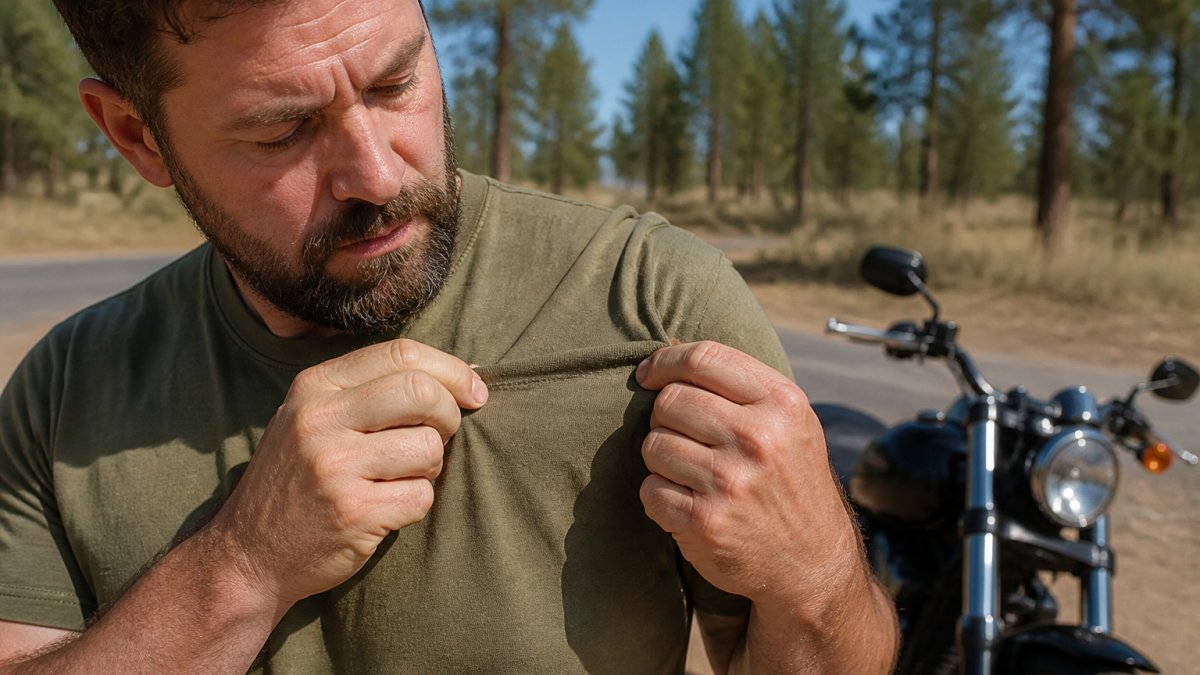
Seams, Collars, and Shoulder Tape
Start with the collar. A ribbed collar that springs back into shape survives washing without going floppy. A cheap collar stretches out fast.
Then check the shoulder tape. Self-fabric shoulder tape runs along the inside of the shoulder seam. It keeps the seam from stretching and holds the shirt's clean lines.
Look for these signs of solid construction:
- A ribbed collar that holds its shape
- Shoulder tape that reinforces the seams
- Flat, even stitching with no loose threads
We use soft combed ring-spun blends and self-fabric shoulder tape in our veteran tees for exactly this reason. The details are what keep a shirt wearable after the tenth wash.
Step 3: Use a Size Chart and Fit Guide for Your Body Type
A size chart is your best defense against the online sizing gamble, but only if you use it the right way. Most shoppers glance at the chart, pick their usual letter, and hope.
The fix is a two-minute measurement routine. Grab a soft tape measure and a shirt you already love the fit of. Lay that shirt flat on a table and measure three things:
- Chest width: pit-to-pit, straight across the front, doubled for full circumference
- Body length: from the high point of the shoulder down to the hem
- Shoulder width: seam-to-seam across the top of the back
Write those numbers down. Now compare them to the seller's chart, not to the letter on the tag. A "Large" from one brand can measure two inches wider in the chest than a "Large" from another.
Shopping Between Sizes
If your measurements land between two sizes, the decision depends on how you'll wear the shirt:
- Size up if you plan to layer under a hoodie or riding jacket, or if you prefer a relaxed, roomy cut
- Size down if you want a closer, athletic fit and won't layer
- When in doubt, size up, a slightly loose shirt can be tucked or worn open; a tight one can't be fixed
Fit Guidance by Body Type
Bodies aren't one shape, and neither are good fits. Here's how to shop your build:
- Broad shoulders or a barrel chest: check shoulder width first, then chest. A shirt that fits the chest but pinches the shoulders will bind every time you reach for the bars.
- Longer torso: look for a classic or tall fit with extra body length. A shirt that rides up when you sit or reach is a comfort killer on the bike.
- Leaner frames: a relaxed cut can swallow you. Look for slim or tailored options, or size down and check the body length so it doesn't turn into a dress.
Relaxed vs. Fitted Cuts
Most veteran apparel comes in two broad cuts. A relaxed cut gives you room through the chest and body, good for layering, hot days, and riders who don't want fabric clinging. A fitted cut sits closer to the body, good for a cleaner look under a jacket, but less forgiving if your measurements are off. Know which one you're buying before you check out, because the same size letter can feel completely different across cuts.
A final note: check whether the seller publishes a real size chart with measurements, not just a letter grid. A brand that shows you the numbers is a brand that expects you to get the fit right the first time.
Step 4: Choose Veteran-Owned Clothing Brands You Can Verify
Veteran-owned clothing brands earn trust through transparency, not slogans. Check who runs the brand and what they actually stand for before you buy.
Veteran Biker Saved T-Shirt – Defended the Nation Rides for the King →
Look for a real story, a clear mission, and a stated quality guarantee. A brand that understands the community shows it in the designs and the details.
Ask these questions about any seller:
- Does the brand explain who it serves and why?
- Is there a clear return or quality policy?
- Do the designs respect military service?
Accountability matters. A seller who stands behind the product with a quality guarantee is telling you they expect it to last.
Step 5: Pick Veteran-Themed Shirts That Fit Your Daily Wear
Veteran-themed shirts work best when they match how you actually dress. A bold graphic tee and a subtle emblem serve different moments.
Think about your week. Some days call for a statement piece at a bike night. Other days call for something understated you can wear anywhere.
Match the shirt to the occasion:
- Rides and gatherings: bold back graphics and flag designs
- Everyday casual: a small chest emblem or a clean front print
- Layering: lightweight tees that sit smooth under a jacket
Our Veteran Biker Saved T-Shirt pairs a flag-and-motorcycle graphic with a message that speaks to duty and faith. If you want something quieter, the Veteran Biker Believer Christian Cross T-Shirt carries the same comfort in a more understated design.


Step 6: Test Comfort Across Weather, Layering, and the Ride
A shirt that feels great in the store can fail on the road. Comfort isn't a single feeling, it's how a garment performs across heat, cold, movement, and the wash cycle. Test it against the conditions you actually ride in, not the ones in the product photo.
How Fabric Performs in Heat
In summer heat, breathability is everything. A lightweight cotton-poly blend lets air move through the fabric and wicks sweat away from the skin. Heavyweight cotton, by contrast, traps heat and holds moisture, fine for a cool morning, miserable at a stoplight in July.
What to check before a hot-weather ride:
- Fabric weight: lighter knits breathe better; if the label lists a weight, lean lighter for summer
- Blend ratio: polyester adds durability and helps moisture move; too much of it can feel clammy, so a cotton-forward blend is the sweet spot
- Color and weave: darker, denser fabrics absorb more heat, a practical consideration on long sunny rides
How Fabric Performs in Cold and Layering
Cold weather is a layering game. A lightweight tee sits smooth under a hoodie or riding jacket without bunching at the waist or armpits. A thick, stiff shirt adds bulk and restricts movement, the opposite of what you want when you're reaching for the bars.
Layering checklist:
- Does the shirt sit flat under a jacket without riding up?
- Do the shoulders and collar stay comfortable when you reach forward into a riding position?
- Does the fabric stretch enough to move with you, or does it bind?
Movement and the Riding Position
Comfort on the bike is different from comfort standing in front of a mirror. In a riding position, your shoulders roll forward and your arms reach out. A shirt with a little stretch in the collar and shoulders, or a relaxed cut through the chest, moves with you instead of fighting you. Test this by reaching forward and across your body before you commit.
Care, Shrinkage, and Long-Term Wear
Comfort fades if you don't care for the garment. A few habits keep a good shirt good:
- Wash cold to reduce shrinkage and protect printed designs
- Tumble dry low or hang dry, high heat is the enemy of fit and softness
- Skip the bleach, it breaks down cotton fibers and dulls graphics
A well-made shirt that's cared for properly stays soft, holds its shape, and keeps its fit for the long haul. A cheap one starts pilling and shrinking after a handful of washes no matter what you do.
Run through this comfort checklist before a long ride:
- Heat: does the fabric breathe or trap sweat?
- Cold: does it layer smoothly under a jacket?
- Movement: do the shoulders and collar stay comfortable in a riding position?
For the rider who wants the message to match the miles, the Still Healing Veteran Biker T-Shirt keeps things light and smooth under a jacket. And when you want a bold back graphic for the bike night, the I Fought for Your Freedom Veteran Motorcycle T-Shirt delivers it on the same comfortable build.

The U.S. Department of Veterans Affairs feature on designing clothing for veterans with prosthetics shows why comfort and ease of wear matter so much for veterans. Good design starts with the person wearing it.
| Check | What to Look For | Why It Matters |
|---|---|---|
| Fabric | Lightweight cotton-poly blend | Breathes and moves with you |
| Collar | Ribbed, shape-retaining | Survives washing without going floppy |
| Seams | Shoulder tape, even stitching | Prevents stretching and rubbing |
| Sizing | Honest size chart | Fewer returns and better fit |
| Seller | Clear policy and quality guarantee | Accountability you can trust |
| Care | Cold wash, low dry | Keeps softness and fit longer |
Frequently Asked Questions
What should I look for when buying comfortable veteran apparel?
Start with the fabric label. A combed ring-spun cotton blend, like the 60% cotton and 40% polyester mix used in Dark Horse Apparel tees, tends to feel softer and hold its shape better than rough, heavy cotton. Then check construction: a ribbed collar that keeps its shape, self-fabric shoulder tape, and a tear-away label all reduce irritation. Finally, compare the seller's size chart to a shirt you already own and confirm the return policy before you order.
How can I tell whether veteran apparel is made by a veteran-owned business?
Look for a seller that explains its story plainly and names the community it serves. Veteran-owned clothing brands usually describe their connection to service on the about page, publish real product photos, and answer questions about sizing and returns directly. Read customer reviews for details on fit and fabric rather than star ratings alone. If a shop is vague about who runs it or copies generic military imagery with no context, treat that as a warning sign and keep looking.
What fabrics are most comfortable for everyday veteran-themed clothing?
For daily wear, a lightweight cotton-polyester blend works well because it breathes, stretches slightly, and dries faster than pure heavy cotton. Dark Horse Apparel uses a 4.3 oz/yd² 60/40 combed ring-spun blend across its veteran-themed shirts, which keeps the fabric light enough to layer under a riding jacket. If you run hot or ride in summer, favor lighter weights and breathable knits. If you want warmth, layer a hoodie over a tee rather than buying a single heavy shirt.
How do I choose veteran-themed clothing that feels authentic and respectful?
Pick designs that reflect real service and faith rather than shock value. Branch-specific insignia should match the branch you served, and patriotic symbols like the flag should be printed clearly and treated with care. Read the product description to see what the graphic actually says and who it is for. Dark Horse Apparel, for example, prints messages like 'Defended the nation, rides for the King' on its veteran biker tees, so you know exactly what the shirt stands for before you buy.
Finding gear that fits your body, your ride, and your values takes a little homework. Dark Horse Apparel builds bold, identity-focused clothing for veterans and riders, backed by a quality guarantee and thematic collections that let you wear your service and faith with pride. Skip the guesswork and shop the collection that fits how you actually live.

