

Table of Contents
- Is Premium Clothing Worth the Money? It Depends on What You're Buying
- Premium Clothing vs Cheap Clothing: What Actually Changes
- How to Tell If Clothes Are Good Quality Before You Buy
- Cost Per Wear Clothing: The Math That Settles the Argument
- Why People Buy Expensive Clothing (And When It's Actually Worth It)
- How to Care for Clothes So They Last (And Protect What You Paid For)
- When Premium Clothing Is Worth the Money: A Decision Framework
- Frequently Asked Questions
Last Updated: October 16, 2026
Is Premium Clothing Worth the Money? It Depends on What You're Buying
Ask ten riders whether premium clothing is worth the money and you'll get ten different answers, usually delivered with strong opinions. The honest answer is that it depends on the garment, the construction, and how often you'll actually wear it. At Dark Horse Apparel, we build identity-focused apparel for veterans, Christian riders, and the riding community, so we think about this question constantly. Below, we'll show you exactly how to judge a garment before you spend, and when paying more genuinely pays you back.
That's the short version. The longer version requires separating two things most shoppers blur together: price and quality. They overlap, but they are not the same thing.
Premium Clothing vs Cheap Clothing: What Actually Changes
Premium clothing vs cheap clothing comes down to three measurable differences: the fabric, how the seams are stitched, and how the garment is cut and finished. Everything else, including the logo on the chest, is marketing. A higher price tag buys you better inputs and more careful assembly, or it buys you a brand name. Your job is figuring out which one you're paying for.
Cheap garments aren't automatically bad. They're built to a cost target, which means thinner fabric, fewer stitches per inch, and simplified patterns that fit a wider range of bodies less precisely. Premium garments are built to a durability target, which means denser fabric, reinforced stress points, and patterns cut for a specific fit.
Fabric, Stitching, and Construction: The Three Things That Matter
Fabric weight and fiber content decide how a garment drapes, breathes, and survives washing. Heavier cotton knits hold their shape longer; blended fabrics resist shrinking but can pill. Check the label for fiber percentages, not just the marketing name.
Stitching is where cheap and premium clothing separate fastest. Look for tight, even stitching with no loose threads, and check high-stress areas like shoulders, armholes, and hems. Single-stitched seams fail sooner than double-stitched or reinforced ones.
Construction covers everything from how the collar is attached to whether the hem is straight. A collar that's taped or reinforced holds its shape; a cheap one curls after a few wears. These details cost money to execute, and they're the reason a well-made garment outlasts a bargain one.
How to Tell If Clothes Are Good Quality Before You Buy
You can judge quality in about sixty seconds using your hands and eyes, no expertise required. Feel the fabric for density and weight. Pull gently at a seam to see if the stitches hold or gap. Check that patterns line up at the side seams, because mismatched patterns signal rushed cutting. Then look at the label for fiber content and care instructions.
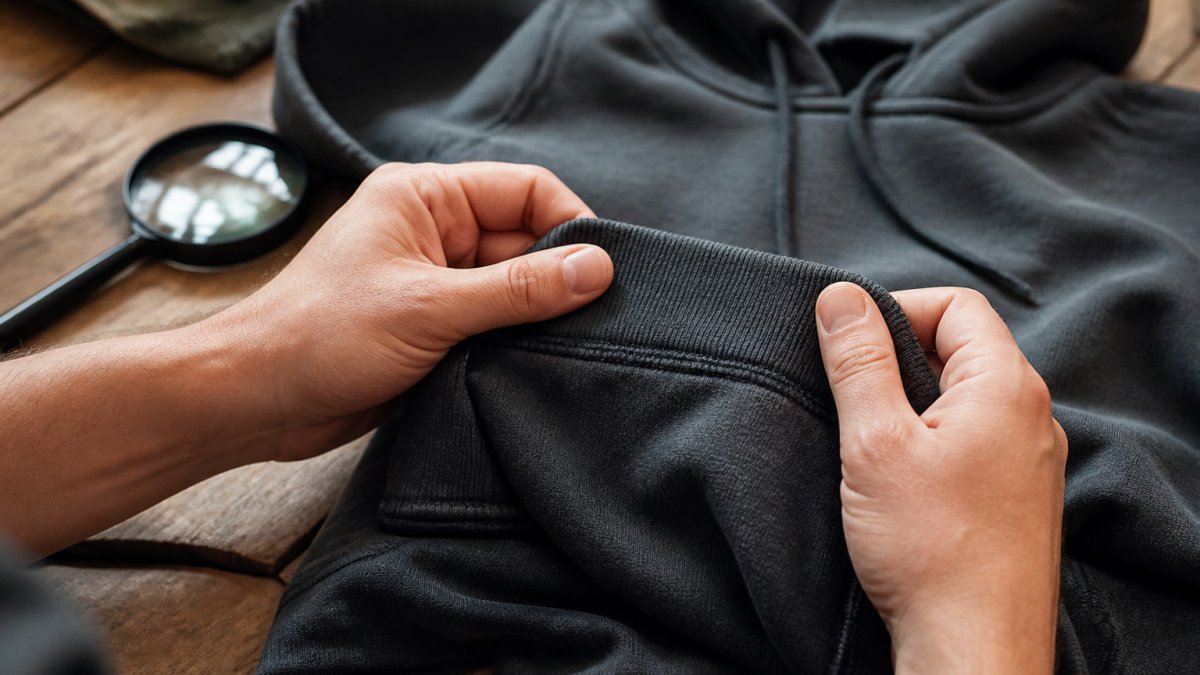
Here's the checklist we'd run through on any garment:
- Fabric feels dense, not thin or papery
- Seams are tight and even, with no loose threads
- Stress points (shoulders, armholes, hems) are reinforced
- Patterns align at the seams
- Collar and cuffs hold their shape when flexed
- Care label lists specific fibers and wash temperatures
Cost Per Wear Clothing: The Math That Settles the Argument
Cost per wear clothing is calculated by dividing the total cost of ownership by the number of times you'll realistically wear the item. Total cost of ownership includes the purchase price, plus any repair, alteration, or special care costs, minus any resale value you recover. This single calculation ends most arguments about whether premium clothing is worth the money.
Run the numbers on two scenarios using transparent, round figures for illustration:
| Garment | Purchase Price | Wears Per Year | Years Worn | Repair/Alteration Cost | Resale Value | Total Cost of Ownership | Cost Per Wear |
|---|---|---|---|---|---|---|---|
| Budget tee | $15 | 20 | 1 | $0 | $0 | $15 | $0.75 |
| Quality tee | $45 | 40 | 3 | $10 (one seam repair) | $5 | $50 | $0.42 |
The budget tee looks cheaper at the register. The quality tee wins over its lifespan because it survives more washes, keeps its shape, and can be repaired. The catch is honesty: if you won't actually wear the item that often, the math flips back in favor of the cheaper option.
Now apply the same logic to a jacket. A $200 jacket worn twice a week for three years (about 300 wears) costs $0.67 per wear before repairs. A $60 jacket worn twice a week for one year (about 100 wears) costs $0.60 per wear, but it may need replacement sooner, and it likely has lower resale demand. Add a $25 repair to the premium jacket and its cost per wear rises to $0.75, still competitive if it lasts a fourth year.
Repairability and resale are the hidden levers. A garment with accessible seams and replaceable buttons can be mended for a fraction of replacement cost. Brands with strong resale demand (think classic denim, leather jackets, or well-known outdoor labels) recover part of the purchase price when you sell. Fast-fashion pieces typically have near-zero resale value. So the true cost per wear for premium clothing can be lower than the sticker price suggests, provided you actually wear it and maintain it.
Use this formula: (Purchase price + repair costs − resale value) ÷ total wears = cost per wear. Run it before you buy, not after.
Why People Buy Expensive Clothing (And When It's Actually Worth It)
People buy expensive clothing for reasons that have little to do with fabric. Status, identity, and belonging drive a huge share of premium purchases. Riders wearing a patch or a themed hoodie aren't just buying cotton; they're signaling who they are and what community they belong to. That's a legitimate reason to spend, as long as you're honest that you're buying meaning, not just material.
But identity alone doesn't make a garment worth the money. The purchase is worth it when the garment does three things: it fits your identity, it's built to last, and you'll wear it often enough to justify the price. It's not worth it when you're paying purely for a logo, when the fit is wrong, or when the item is a one-season trend you'll retire quickly.
To separate genuine quality from branding, run evidence-based checks before you buy. Look at fabric composition (fiber percentages, not marketing names), stitching density (more stitches per inch generally means stronger seams), seam type (double-stitched or reinforced stress points last longer), hardware quality (metal zippers and buttons outlast plastic), and pattern alignment (mismatched patterns signal rushed cutting). These checks take about sixty seconds and don't require expertise.
A decision framework by garment type helps you decide where to spend or save. For items you wear frequently and wash often, like everyday tees, jeans, or riding hoodies, premium construction often pays off. For occasional or trend-driven pieces, a lower-priced option may be smarter.
Environmental and labor trade-offs complicate the picture. A higher price does not automatically mean more ethical or sustainable production. Some premium brands invest in durable materials and fair labor; others simply charge more for the same practices. Longevity is the most reliable environmental lever: a garment worn for years displaces multiple cheaper replacements, reducing overconsumption and textile waste. Resale and repair extend that benefit.
Federal Trade Commission guidance on textile and clothing labeling requires brands to disclose fiber content and care instructions, which is why the label is your most reliable quality signal.
When you combine identity value with evidence-based quality checks and a garment-type decision framework, you can tell whether a premium price reflects real durability and repairability or just a logo.
How to Care for Clothes So They Last (And Protect What You Paid For)
How to care for clothes so they last comes down to three habits: wash less often, wash colder, and dry with less heat. Heat and agitation are what break down fibers and fade prints. Turn garments inside out, use a gentle cycle, and skip the dryer when you can. A quality garment cared for properly can outlast a cheap one by years.
Store items folded rather than hung when the knit is heavy, since hangers stretch shoulders over time. Treat stains immediately, and repair small tears before they spread. Repairability matters here: a garment with accessible seams can be mended, while a cheap one often can't.
American Cleaning Institute laundry care resources outlines temperature and detergent guidance that helps preserve fabric and print integrity.
When Premium Clothing Is Worth the Money: A Decision Framework
Use this framework to decide before you buy, garment by garment:
- Frequency: Will you wear it at least monthly? If not, buy cheaper.
- Lifespan: Does the construction support years of wear? Check the seams.
- Identity: Does it express something you actually stand for? If yes, it holds value beyond fabric.
- Repairability: Can it be mended rather than replaced?
- Cost per wear: Does the math favor the higher price over time?
If you answer yes to three or more, premium is likely worth it. If you answer no to most, the cheaper option is the smarter buy.
Frequently Asked Questions
What is considered premium apparel?
Premium apparel generally means clothing made with higher-grade materials, stronger construction, and tighter quality control than mass-market basics. It often uses heavier fabrics, reinforced stitching, and better hardware like metal zippers instead of plastic. Premium clothing doesn't automatically mean designer labels. A well-made plain hoodie from a smaller brand can be premium without a luxury name attached. The label matters less than the fabric weight, stitch density, and how the garment holds up after repeated washing.
Is premium clothing actually better quality than budget clothing?
Not always. Some expensive clothing carries a high price because of brand markup, marketing, and status, not better construction. The way to tell the difference is to check the garment itself: fabric weight and feel, stitch quality at stress points, seam alignment, and whether the hardware feels solid. When those checks pass, premium clothing typically outlasts cheaper alternatives. When they don't, you're paying for the name. Learning how to tell if clothes are good quality is the skill that matters most here.
How do you calculate cost per wear?
Divide the purchase price by the number of times you realistically expect to wear the item. A $60 hoodie worn 100 times costs $0.60 per wear. A $20 hoodie worn 15 times before it pills or loses shape costs $1.33 per wear. The cheaper item costs more per use. Cost per wear clothing math works best when you're honest about how often you'll actually wear something and how long it will hold up. This is the single most useful tool for deciding whether premium clothing is worth the money.
How can you tell if a piece of clothing is well made?
Check four things: stitching density and evenness, fabric weight and recovery, seam alignment, and hardware quality. Look at stress points like shoulders, armpits, and waistbands, where cheap garments fail first. Give the fabric a gentle stretch and see if it bounces back. Check that patterns line up at the seams. If a garment passes these checks and fits well, it's likely built to last. These checks take under a minute and work whether you're shopping in person or reading product descriptions online.
Deciding whether premium clothing is worth the money comes down to construction, frequency, and identity, not the logo. At Dark Horse Apparel, we build apparel for riders, veterans, and communities who want their clothing to mean something, backed by our quality guarantee and a curated collection of hoodies and tees made to be worn hard. Shop this collection and wear your values with confidence, knowing each piece is designed to last and to resonate with your community.
